

A heritage shaped by the tides
Tide mill
A mill set between lake and ria
A coastal location
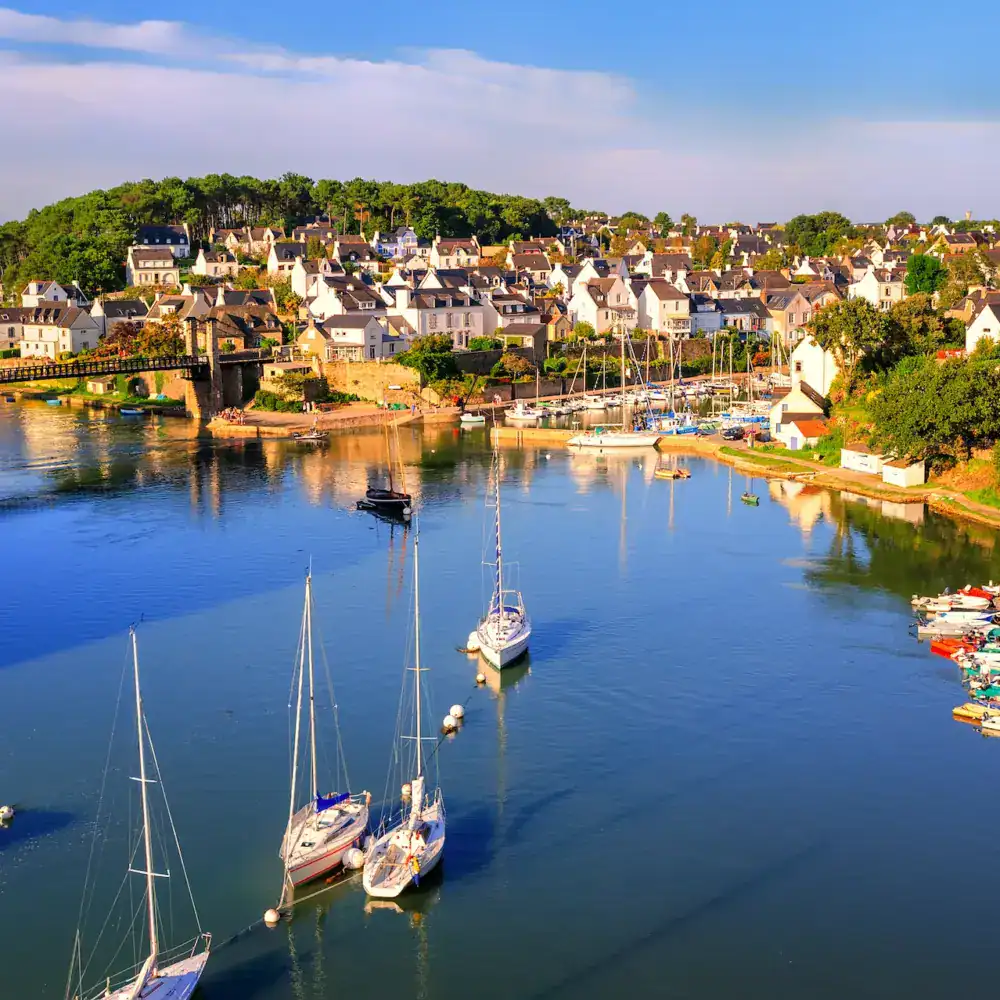
The tide mill is located on the dike separating the lake from the ria, in an area directly influenced by the tides. This particular position, between the ria and the lake, is characteristic of tide mills, which require immediate proximity to the sea…
Although the mill is no longer in operation, its presence still structures the site, while the associated lake remains. Tidal variations modify the appearance of the water and the ria, underlining the central role of this natural phenomenon in the organization of the site and in the history of the mill.

How a tide mill works
Ancestral tidal energy
A tide mill is a water-powered mill installed on the seashore and driven by the tides. Its operation is based ontidal energy. On a rising tide, the sea fills a basin located behind a reservoir. This basin is filled by one-way valve gates, which let the water in without allowing it to return.
At ebb tide, when the difference in water level between the basin and the sea is sufficient, sluice gates are opened. The water in the basin then flows into the sea, driving a mill wheel. In the past, this principle was used to harness the power of water to generate mechanical energy.
An ancient historical heritage
Mills since the Middle Ages
The first tide mills were built in the early Middle Ages. It is said that they were probably built in the London area. This type of installation bears witness to an ancient and ingenious use of natural resources, long before the industrial era. The tide mill near Carnac is part of this historical legacy, even though it is no longer in operation. The building is privately owned and cannot be visited. However, it remains a striking feature of the landscape, reminding us of the essential role these mills once played in harnessing the energy of the tides.

A visible but inaccessible site
A private place, not open to visitors
The tide mill is privately owned and cannot be visited. It is therefore not possible to enter the building or access its facilities. However, the site remains visible in its surroundings, and the associated lake is still present. The tides continue to influence the surrounding landscape, offering a changing natural spectacle.
The tide mill thus remains an observable but inaccessible heritage landmark, contributing to the identity of the local coastline.