the most beautiful spots on the bay and peninsula
Camping in Quiberon
The beaches of Quiberon Bay
swimming and water sports
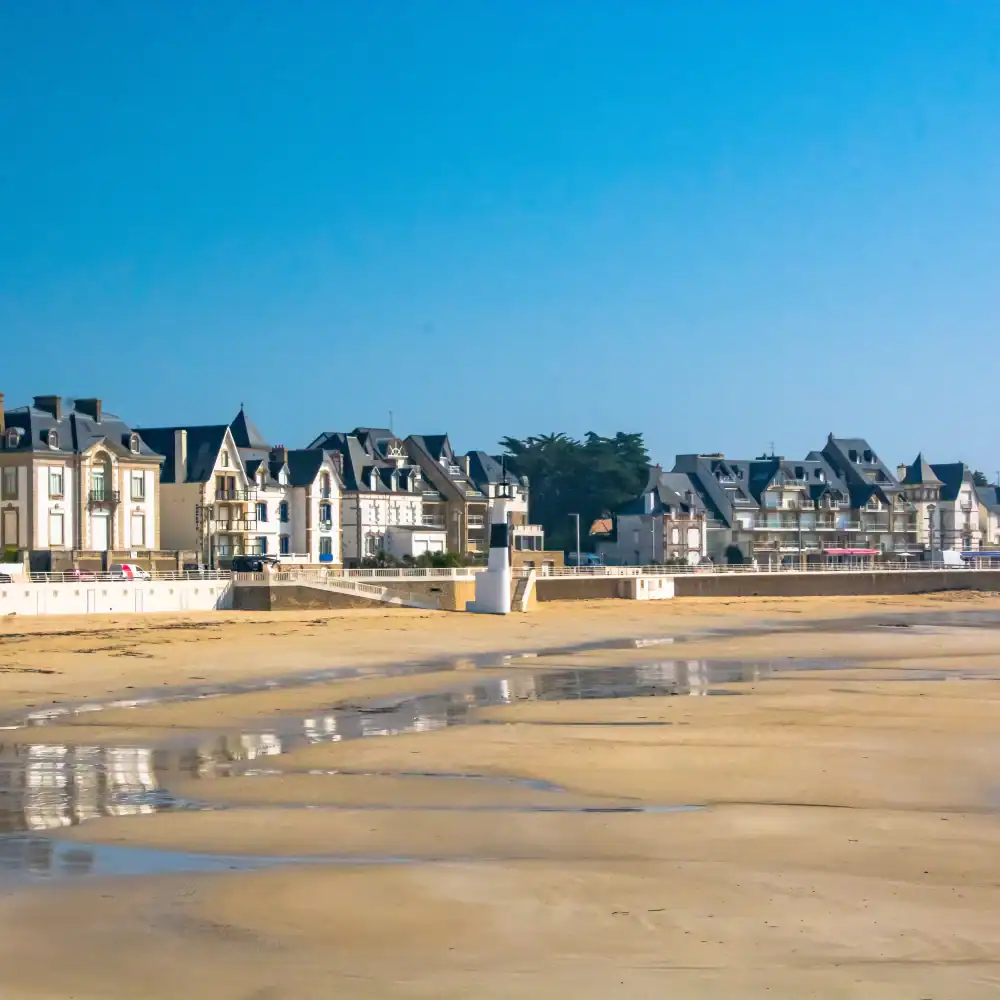
Quiberon Bay has not stolen its reputation. Ranked among the most beautiful bays in the world, it offers a setting of rare beauty, protected from the prevailing winds. The calm sea is ideal for family bathing, paddle board ing or kayaking.
From your *** campsite in Carnac, it’s just a short drive to one of the most beautiful beaches in Saint-Pierre-Quiberon. Sports enthusiasts will be delighted by Quiberon’s large beach, where surfing and kitesurfing are both practiced.
For a more tranquil atmosphere, head for Plage du Conguel. The beach on the north side is the most pleasant and the largest, sheltered from westerly winds. As for Kermahé beach, nestled in the heart of the village of Saint-Pierre-Quiberon, it too is a family’s delight. On the menu: white sand, pretty seafront villas and a children’s beach club.
The wild coast of Quiberon
hiking between cliffs, moors and ocean
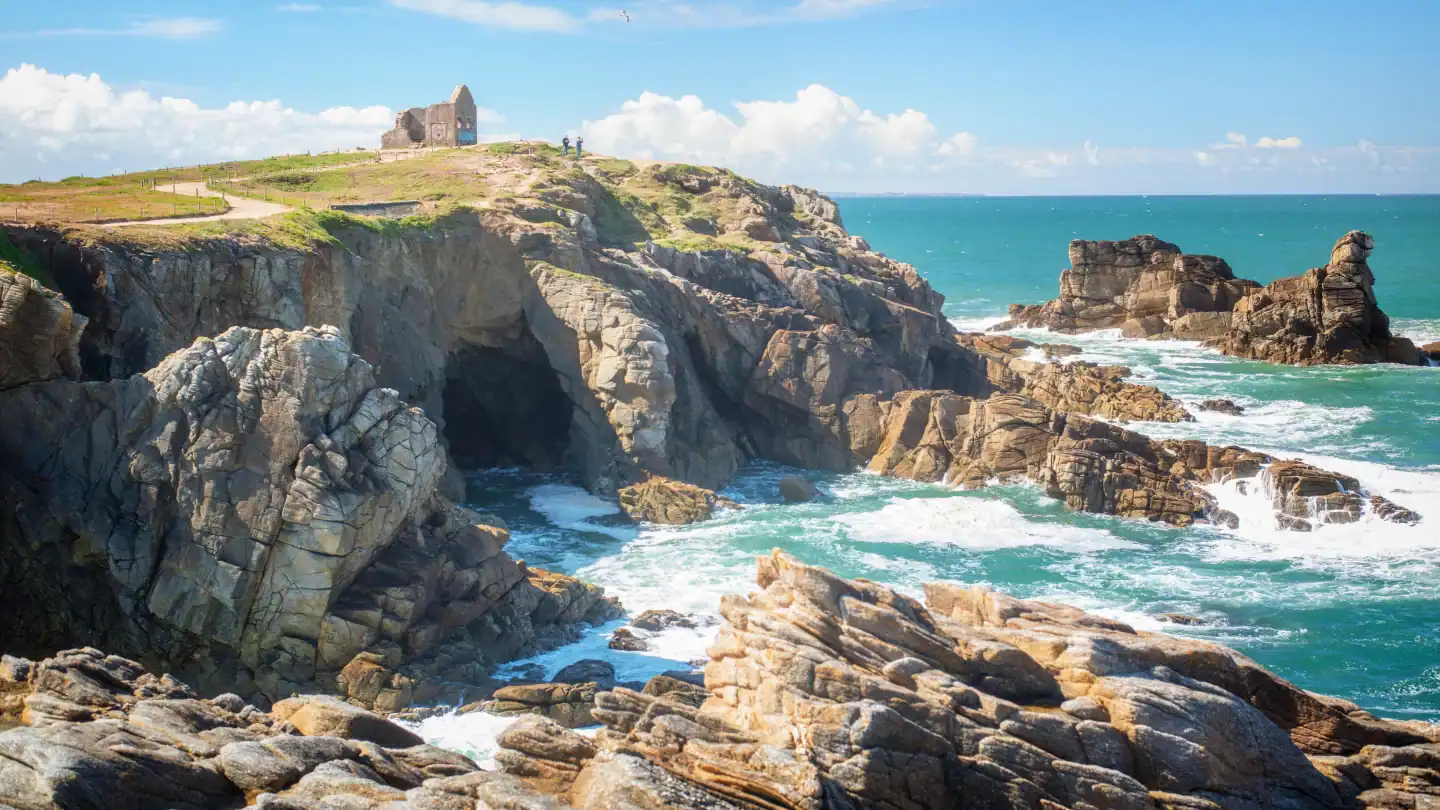
If you love wide open spaces, put on your sneakers! To the west of the Quiberon peninsula, the wild coast unveils breathtaking scenery over a ten-kilometer stretch, from the Pointe du Percho (Saint-Pierre Quiberon) to the Château Turpault (Quiberon). Cliffs covered in moorland, secluded coves, arches carved out by the waves: Quiberon’s wild coastline is a real eye-catcher. Beware: swimming is forbidden here, as the sea can be so unpredictable.
At the southernmost tip of the peninsula, at the Pointe du Conguel, take in the panoramic view: a path leads around the Pointe to an orientation table, where you can locate the islands and the entrance to the Gulf of Morbihan (Houat and Hoëdic, Carnac, La Trinité-sur-Mer…).
By bike, the “La Littorale” cycle route (V45) takes you to the Quiberon peninsula, via Sainte-Barbe, Penthièvre and Portivy, to Port-Maria beach and Quiberon fishing port.
The Penthièvre isthmus
This narrow strip of sand, barely 20 metres wide in places at high tide, links the Quiberon peninsula to the mainland. A coastal path links the Penthièvre isthmus to the Port Blanc arch, also known as Roche percée. A cycle path has been laid out along the D768 to cross the Penthièvre isthmus.
Grand Site de France des Dunes Sauvages de Gâvres à Quiberon
Wide, convenient opening hours
Labelled a Grand Site de France in 2018, the Dunes Sauvages de Gâvres à Quiberon is the largest dune massif in Brittany. This immense arc of sand, untouched by construction, covers 12,000 hectares and stretches over 35 kilometers from the Gâvres peninsula to Quiberon.
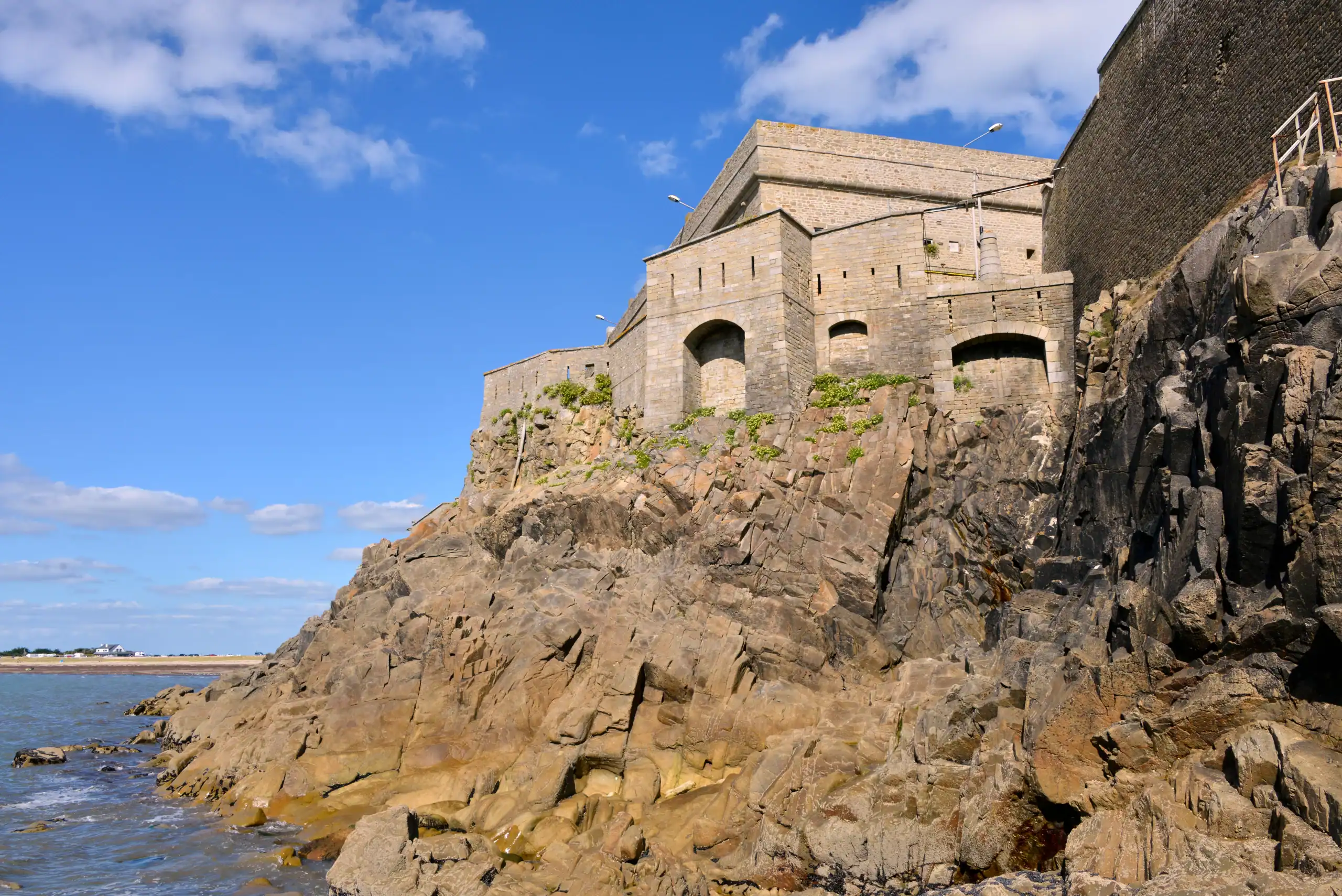
The two peninsulas are linked to the mainland by two large tombolos, strips of sand formed by the currents. The 7-kilometer-long tombolos at Quiberon leads to the entrance to the peninsula, dominated by the imposing Fort Penthièvre. This military fort was built in the mid-17th century to control the beaches of the peninsula against English invasion.
During the summer, the Syndicat mixte du grand site Gâvres Quiberon offers guided tours and activities to discover the biodiversity of the dunes and the coast.
From Quiberon, board immediately for the Morbihan islands
Belle-Île, Houat and Hoëdic
From the port of Quiberon, at the end of the peninsula, Océane ferries take you to three splendid islands: Belle-Île, Houat and Hoëdic. It’s the perfect way to enjoy a variety of pleasures, from secret coves to wild beaches and picturesque villages.
Special mention goes to Belle-Île, the largest of the three, which offers an irresistible blend of unspoilt nature and cultural heritage. Allow 50 minutes for the crossing from Quiberon to Belle-Île-en-Mer.