

Discover the island of Saint-Cado
and its famous house with blue shutters
The little blue house
on the islet of Nichtarguer
Breton icon between land and sea
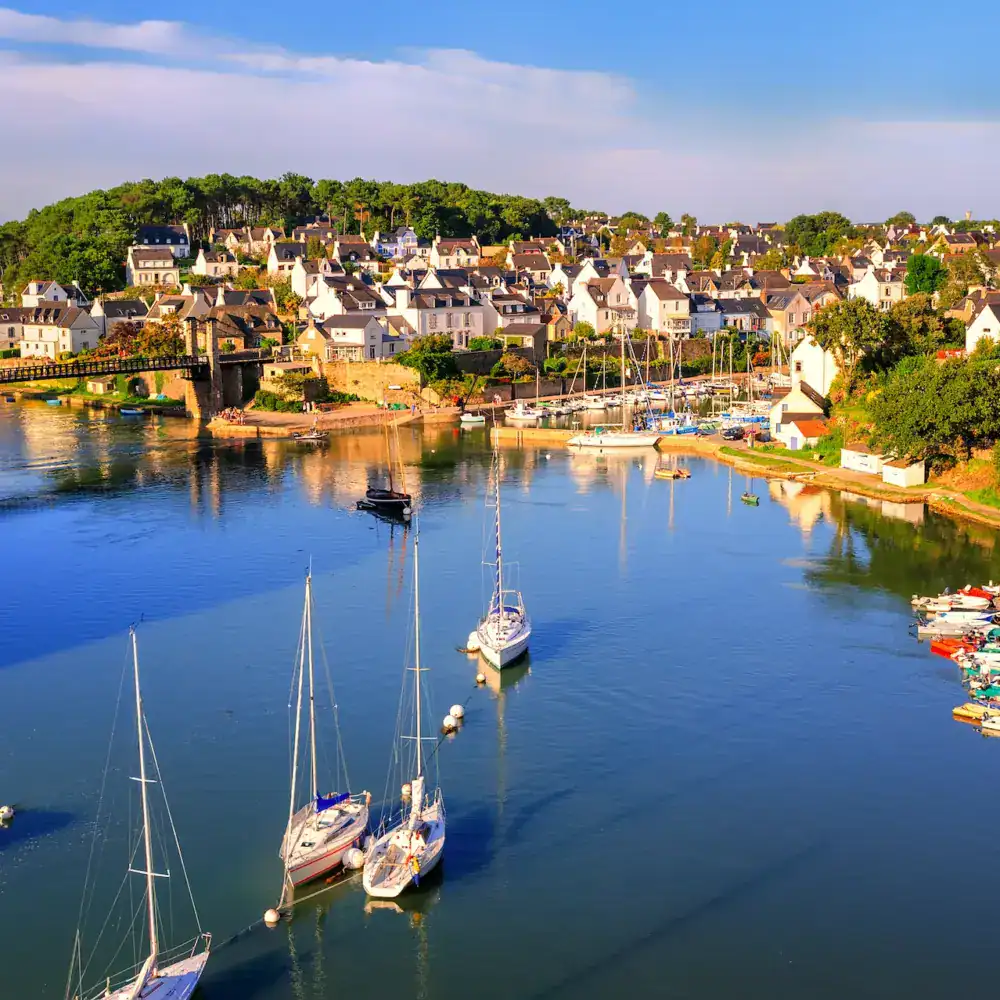
The islet of Saint-Cado is located in the commune of Belz, in the Morbihan department , some fifteen kilometers from our campsite in Carnac. The hamlet is linked to the mainland by a hundred-meter-long stone bridge.
The place is known to all lovers of Brittany for its little blue-shuttered house on the water: the Nichtarguer house (in Breton “En Istra ar Guer”, meaning the oyster house). Now uninhabited, this picturesque building housed the oyster farm guards until the 1960s. It soon became a favorite subject for photographers and painters, who meet on the quay or the little bridge.


The legend of Saint-Cado bridge
Myths and mysteries of the ria d’Étel
Driven out by the Saxons in 525, a Welsh monk named Cado settled on this isolated islet in the River Étel. According to legend, the hermit wanted a bridge to link the island to the mainland, but it would have cost a lot to build. He decided to make a pact with the Devil to have his wish granted. The only condition was to grant him the soul of the first living creature to cross the bridge. Saint Cado agreed, and the bridge was built in a single night. At dawn, the canon duped the devil by making a cat the first to cross the bridge.
A place of stone, silence and legends
The chapel of Saint-Cado
In the middle of the islet stands a small Romanesque chapel dedicated to Saint Cado. Made entirely of granite, it was built by the Benedictine monks of Sainte-Croix de Quimperlé in the 11th century. According to tradition, hearing-impaired people came here to seek healing by inserting their heads into the cavity of a small altar – known as Saint Cado’s “bed” – which can still be seen in the chapel.
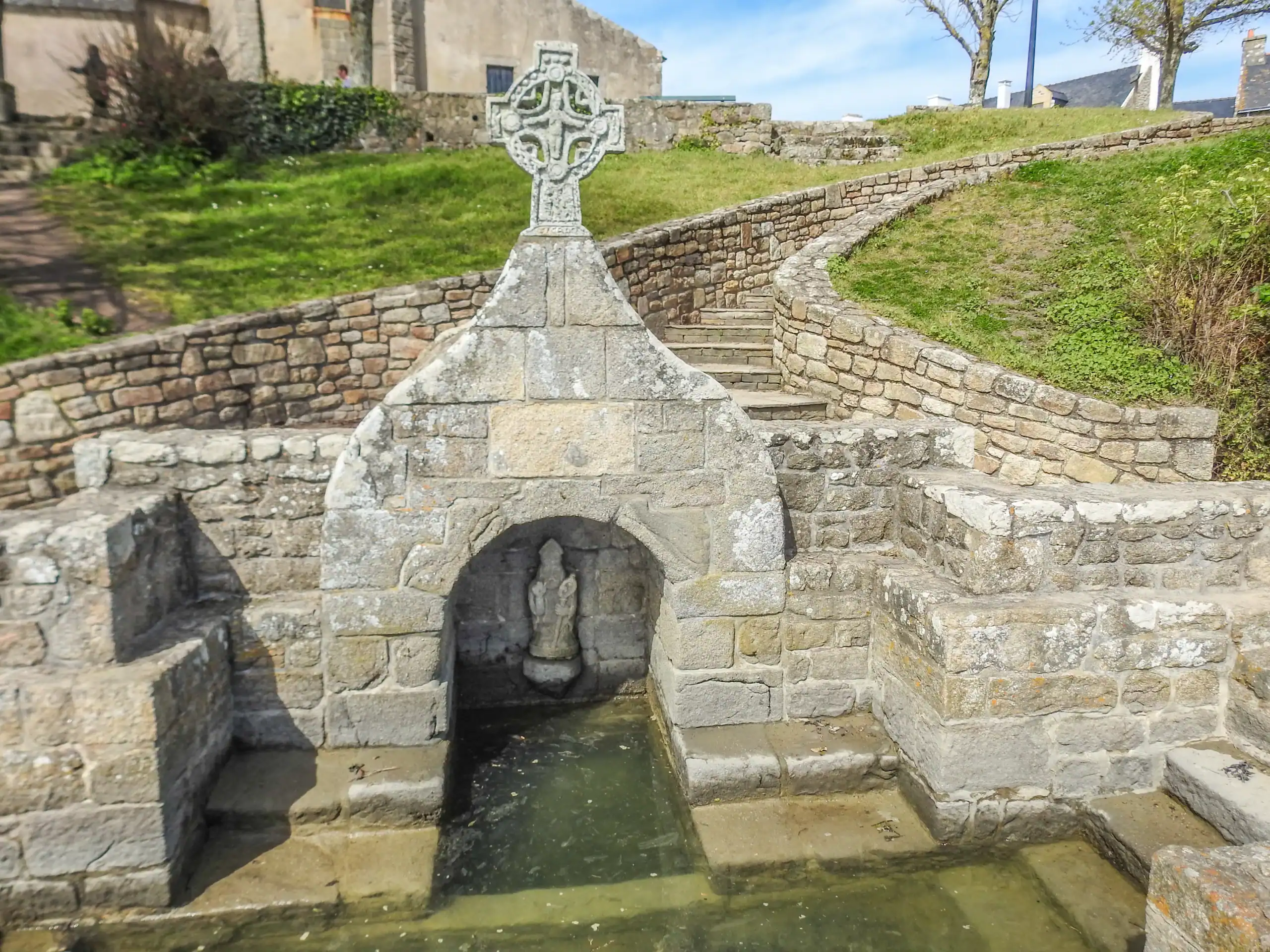
A few steps away, you can discover a calvary adorned with sculptures and a devotional fountain submerged by the waves at high tide. The chapel, calvary and fountain have been listed as historic monuments since 1936.
Below the chapel, a coastal path leads around the island. The walk offers lovely views of the Étel river , the oyster beds, the forest and the small coves where a few boats anchor according to the tides. You can also discover Saint-Cado by canoe or stand-up paddle, with the Cercle Nautique de la Ria d’Étel.
For the less sporty, the Navix company offers guided cruises up the river from the port of Étel, passing the islet of Saint-Cado, the Nichtarguer house and the oyster beds.
The pardon of Saint-Cado
The beating heart of the island every autumn
In Brittany, pardons are typical pilgrimages involving large processions and religious and secular festivities. The age-old Saint-Cado is held on the third Sunday in September. After mass, the tradition continues with a blessing of the sea and lost sailors, the immersion of the wreath on the Saint-Cado bridge, and Breton music and dance.